The short answer
The Lullaby Trust recommends keeping a baby’s room between 16 and 20°C (about 61 to 68°F), and using a room thermometer rather than guessing. Check your baby by feeling their chest or the back of their neck: if it feels hot or sweaty, take a layer off. Hands and feet are usually cooler and tell you little.
The temperature range to aim for
The Lullaby Trust, a UK safer-sleep charity, gives 16 to 20°C as the recommended room temperature for babies. It adds that guessing is unreliable, so keep a room thermometer where your baby sleeps.
The AAP and the US Safe to Sleep campaign don’t give a number. They say to dress your baby for the temperature of the room, so the range above is a useful starting point, not a law.
Why too hot matters most
The AAP says overheating can increase the risk of SIDS, and the Safe to Sleep campaign says babies can overheat when they wear too many layers of clothes and bedding for the room. The signs the AAP lists are sweating, a hot chest and flushed skin.
A baby who is a little cool is easier to fix than one who is overheated, and a quick feel of the chest settles the question.
How to check your baby
- Feel the chest or the back of the neck. The Lullaby Trust says hands and feet are usually cooler and aren’t a good guide.
- If the skin is hot or sweaty, remove a layer or some bedding.
- Check the thermometer at cot height, not by the door.
What to dress them in
The AAP suggests one more layer than an adult would be comfortable in. The Safe to Sleep campaign says to use a wearable blanket or an extra layer of clothing, rather than adding things to the sleep area. The Lullaby Trust adds:
- Use light bedding or a well-fitting baby sleep bag.
- Avoid duvets and quilts.
- No hat indoors, because babies lose heat through their heads.
For the rest of the cot, the AAP’s safe sleep guide has the full list. Swaddled babies get warm faster; see when to stop swaddling.
Hot weather and cold nights
- Heatwave: lighter clothes, a thinner sleep bag or just a vest, and a curtain closed against the sun. Keep checking the chest.
- Cold night: the Lullaby Trust says an extra layer on the baby usually works better than leaving the heating on all night. If it must stay on, keep it low and no higher than 20°C.
Using a room thermometer well
A thermometer only helps if it reads the air your baby is actually in. Put it at cot height, away from windows, radiators and direct sun, and look at it before bed and again when you go to bed yourself. A cheap one is enough. Many show a high and low reading, which tells you how warm or cold the room got overnight.
Write down the number that felt right for your baby once, so you’re not working it out from scratch in a heatwave.
Common mistakes
- Judging by hands and feet. They run cooler. The Lullaby Trust says to check the chest or the back of the neck.
- Adding a hat indoors. The Lullaby Trust says not to, since babies release heat through their heads.
- A quilt or duvet. The Lullaby Trust says avoid them.
- Dressing for your own comfort. A cold parent in the room doesn’t mean a cold baby.
- Heating on all night. The Lullaby Trust says to add a layer to your baby instead, or keep it low and no higher than 20°C.
A quick bedtime check
- Read the thermometer. Aim for 16 to 20°C.
- Choose light bedding or a sleep bag for the temperature.
- Leave out the hat, quilt and soft toys.
- Feel the chest or back of the neck once they’re settled, and again at your next night check.
Where a monitor fits
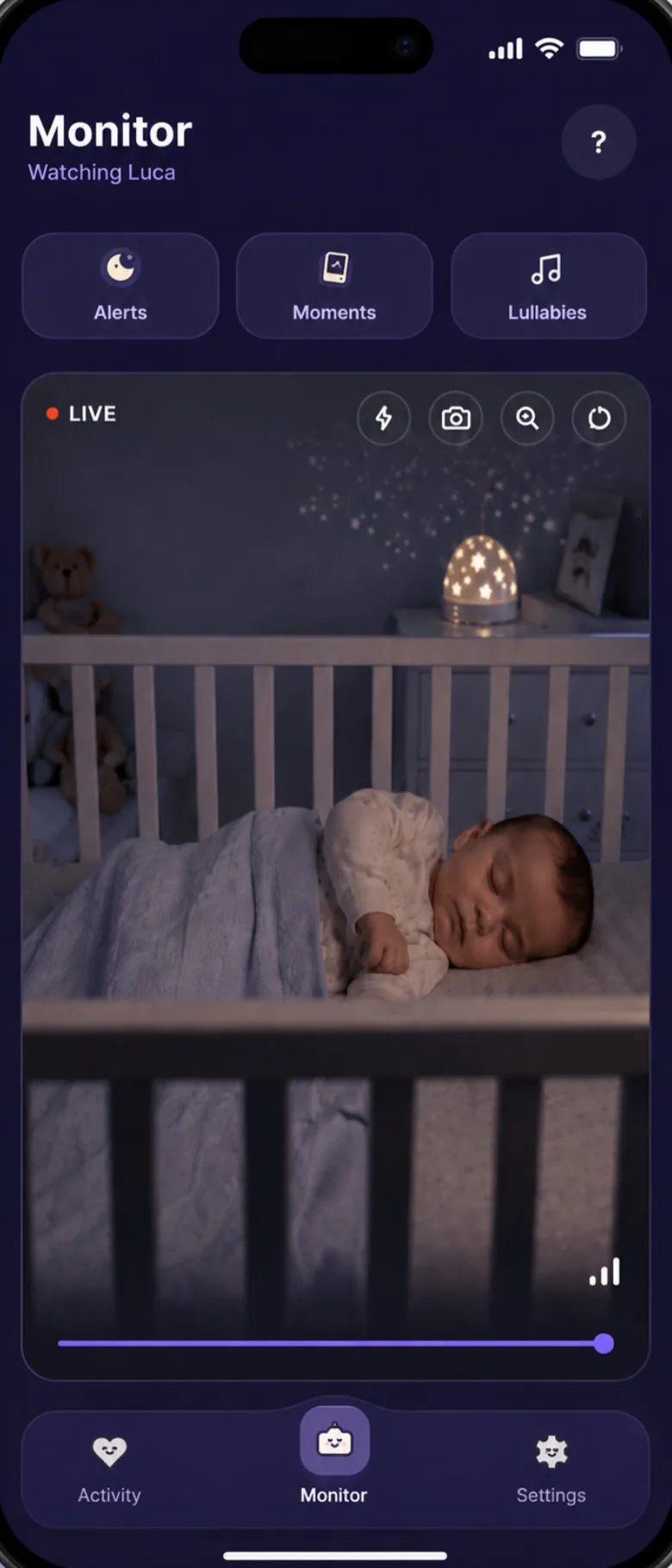
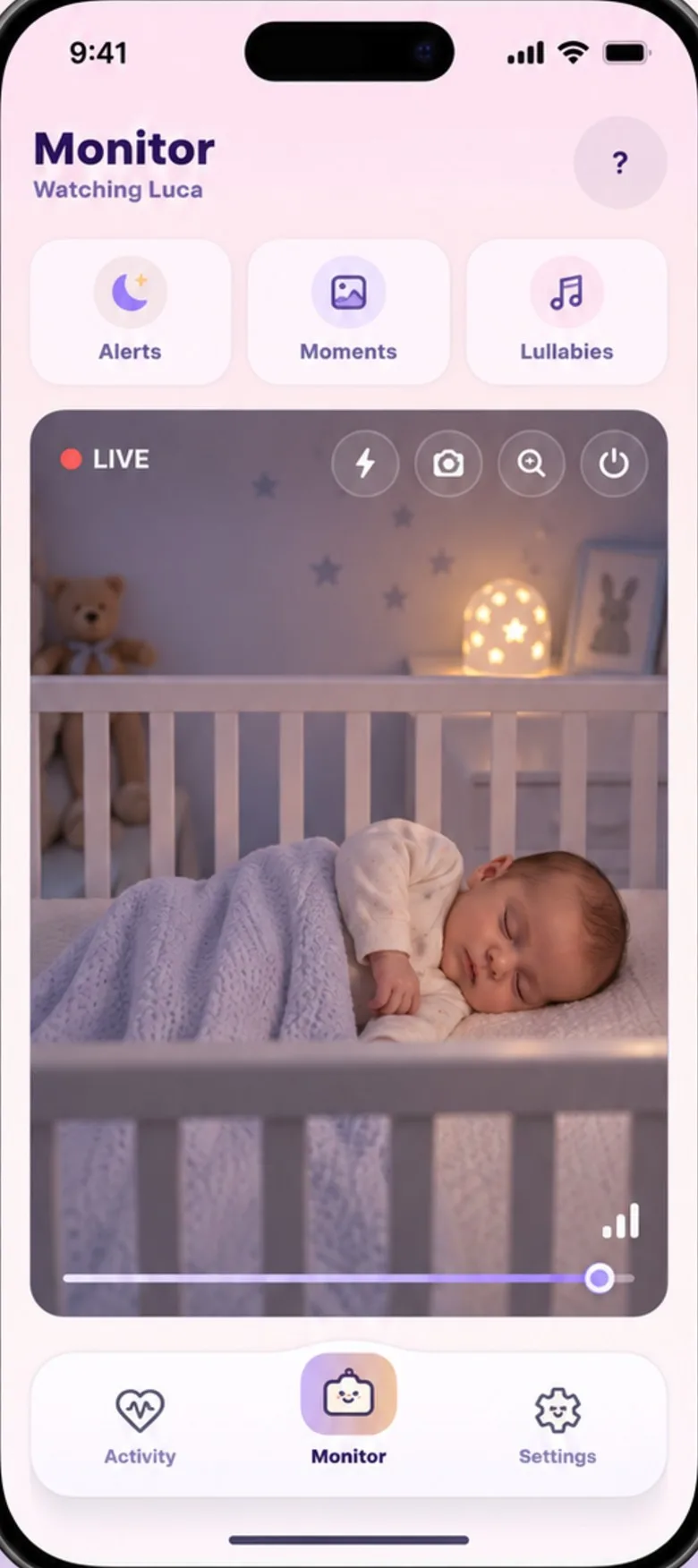
Baby’s Day In shows a picture and plays sound; it doesn’t measure the temperature of the room or your baby. A room thermometer does that, and nothing replaces your own check of the chest. A monitor can tell you a baby is awake, which is when a quick check is easiest. Where to put the phone is in where to put a baby monitor.
Room temperature, quick answers.
Is 22°C too hot for a baby to sleep?
It’s above the 16 to 20°C range the Lullaby Trust recommends. Use a thermometer, dress the baby lightly, and check their chest. If it feels hot or sweaty, take a layer off.
Should I use a fan?
The sources we checked don’t advise on fans, so ask your doctor or health visitor.