The short answer
The AAP, the US Safe to Sleep campaign and the NHS all say to keep your baby in your room, in their own cot or bassinet, for at least the first 6 months. The AAP says room sharing can lower the risk of SIDS by as much as 50%. After that, moving to their own room is a family choice, not a deadline.
What the advice says
Three well-known sources agree:
- The AAP recommends room sharing for at least the first 6 months, with the baby’s sleep area near, but not in, your bed.
- The Safe to Sleep campaign says to share a room for at least the first 6 months, with a separate sleep space such as a crib, bassinet or portable play yard.
- The NHS says that for the first six months, your baby should be in the same room as you when they sleep, day and night.
None of them sets a date after that. Some families move at 6 months, some later. The advice is about the minimum.
Planning the move
Beyond the 6-month minimum, the sources don’t say how to move. These are common-sense steps, not medical advice:
- Pick a calm week. Not during an illness, teething rush or a travel week.
- Keep the routine and the same sleep space where you can.
- Set the new room up first. Cot clear, room temperature comfortable (see the range), cords out of reach.
- Expect a few rough nights and give it time before you decide it isn’t working.
It counts for naps too
The NHS says your baby should be in the same room as you when they’re asleep, both day and night. That means daytime naps for the first six months, not only bedtime. If naps happen in another room, your baby needs the same safe sleep space and, ideally, an adult in earshot. A monitor can help with that, but it doesn’t replace being nearby.
A checklist for the new room
- The sleep space. A cot, bassinet or play yard with a firm, flat mattress and a fitted sheet.
- Nothing loose. No pillows, blankets or soft toys in the cot.
- The temperature. See the room temperature guide.
- Cords and blinds. Keep cords from curtains and chargers out of reach. The CPSC advises keeping monitor cords at least three feet from the cot.
- Light and sound. A low night light if you need to check on them, and a soft sound if you use one. How loud is too loud covers volume.
What to expect after the move
Your baby has slept within sound of you since birth, so a quiet room is new. Many babies wake more at first. Keep responses short and calm, keep the routine the same, and give it a week or two before you judge. If sleep is a struggle for longer, or you’re exhausted, talk to your doctor or health visitor. Your own rest matters too.
When a monitor helps
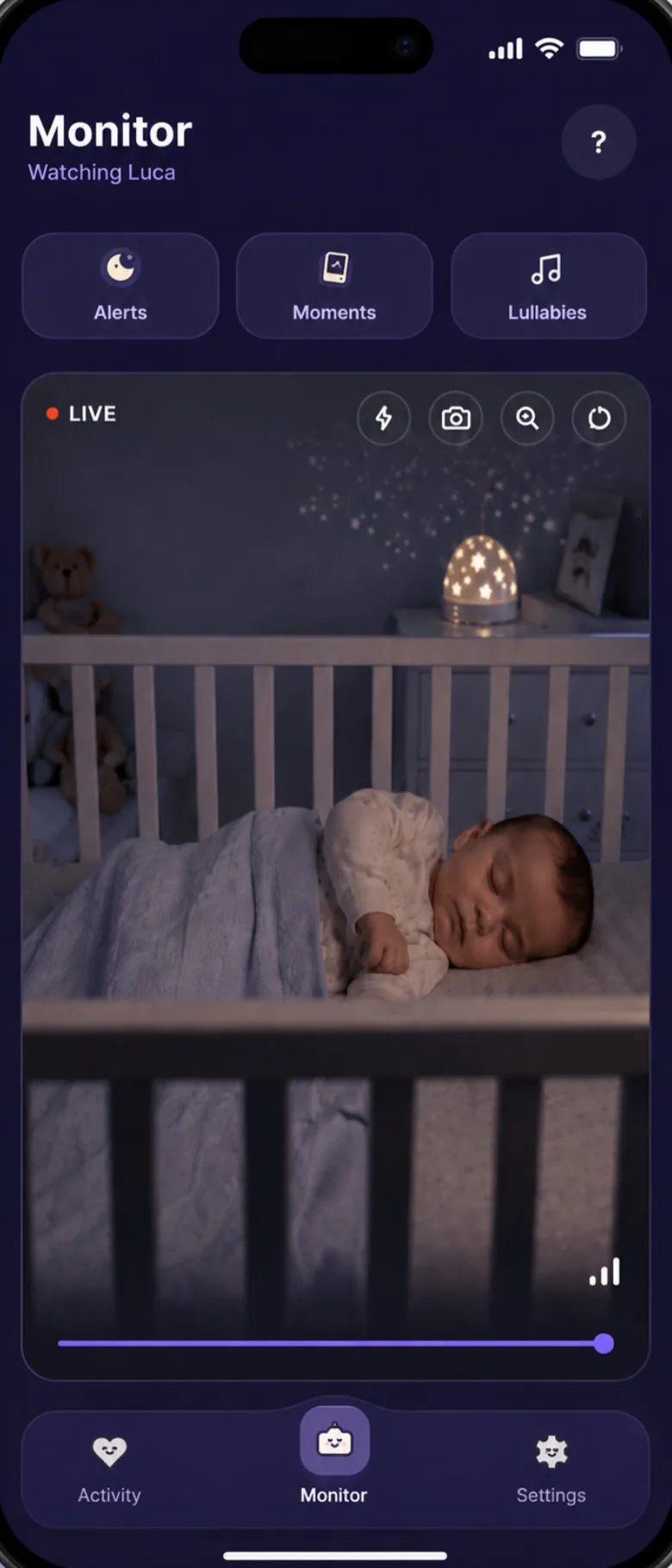
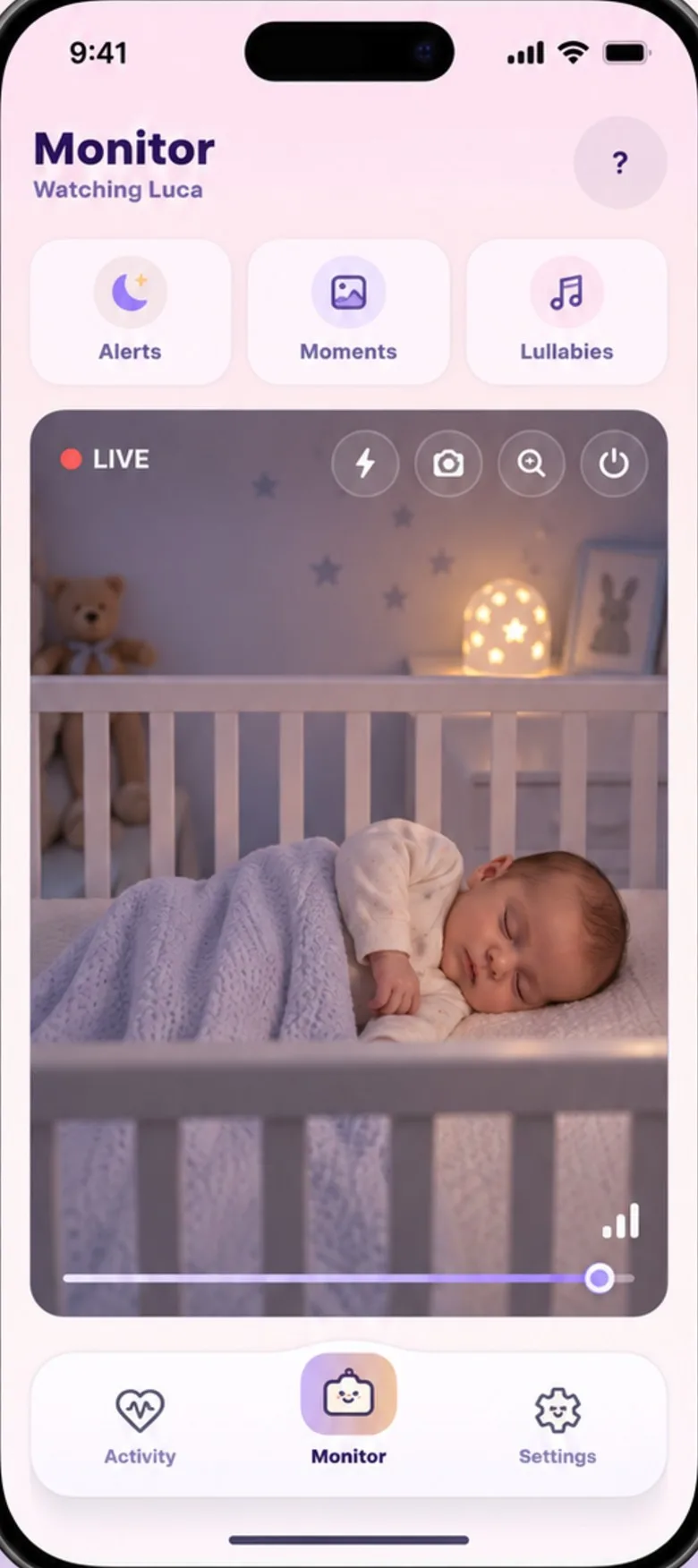
Once the baby is down the hall, you can’t hear a stir through the wall. A monitor fills that gap. With Baby’s Day In, one phone stays in the nursery and the other goes with you, so you can listen or look in. It doesn’t replace checking on your baby, and it doesn’t make a room safe: breathing monitors and SIDS claims covers what monitors can and can’t do.
For where to put it, read where to put a baby monitor.
Own room, quick answers.
Is it OK to move a baby to their own room at 3 months?
The AAP, the Safe to Sleep campaign and the NHS all advise room sharing for at least the first 6 months. Talk to your doctor or health visitor if you have a specific reason to move earlier.
Does a baby monitor mean I can move them sooner?
No. The advice is about being in the same room, and a monitor is not the same as that. Moving earlier than 6 months is a question for your doctor.