Baby spitting up: normal, or not?

Most babies bring up a little milk. What counts as normal, what helps, when it usually fades, and the signs that mean a call to the doctor.

  • By the Baby’s Day In team
  • Published
  • 3 min read

A little milk coming back up, from a baby who is happy and gaining weight, is normal. The AAP says all babies spit up; it usually starts around 2 to 3 weeks, peaks at 4 to 5 months, and goes away by 9 to 12 months for most. Call your doctor if your baby refuses feeds, cries or arches in pain, isn’t gaining weight, or the spit-up is green or has blood in it.

What’s normal

The NHS says it’s common for a baby under 1 to bring up a little milk during or after feeds. The AAP calls it reflux (GER): stomach contents coming back up into the food pipe, sometimes out of the mouth. A baby who is happy, feeding well and gaining weight usually needs no treatment, according to the NHS.

When it starts and stops

The AAP says it usually begins at about 2 to 3 weeks, peaks between 4 and 5 months, and for most full-term babies is gone by 9 to 12 months. Sitting up and starting solid foods tend to help. The NHS puts it similarly: it improves by around the first birthday.

What can help

From the NHS:

  • Check your breastfeeding position or bottle technique.
  • Hold your baby upright during feeds and for as long as you can after.
  • Burp them regularly during feeds.
  • Always lay them flat on their back to sleep, and don’t raise the head of the cot or Moses basket.

That last point matters: propping the cot isn’t a safe fix. If you’re worried about how much your baby is taking, see the baby feeding chart.

When to call the doctor

The AAP lists these as reasons to call your pediatrician:

  • Refusing to feed
  • Crying or arching the back during feeds, as if in pain
  • Blood, or green colour, in the spit-up
  • More frequent or heavier spit-up
  • A swollen, distended or hard belly
  • Wheezing or coughing
  • Poor weight gain, or fewer wet and dirty nappies

The NHS adds forceful (projectile) vomiting, green or yellow vomit, blood in poo, a very high temperature, dehydration signs or a baby who can’t be comforted, and says to get urgent help for them. Read the NHS page before deciding to wait.

Spit-up or vomit?

The difference is mostly about force and amount. The NHS describes spit-up as “a little bit of milk” that comes back easily, with no distress. Its warning sign is projectile vomiting: being sick with more force than usual. The AAP’s list includes a spit-up that gets more frequent or more intense. If a feed comes up in a large amount, again and again, or shoots out, treat it as vomiting and call your doctor.

Reflux and safe sleep

It’s tempting to prop a baby up to sleep. The NHS says not to: always lay your baby flat on their back, and don’t raise the head of the cot or Moses basket. Upright time belongs to the time after a feed, while you’re holding them. Then put them down flat. More on the basics in the AAP’s safe sleep guide.

What to tell the doctor

Notes help. Jot down how often it happens, roughly how much, how soon after feeds, and anything else you’ve noticed: arching, coughing, refusing a feed, fewer nappies. Ask about weight gain at the next checkup. The NHS says to see a GP if the symptoms don’t improve, if reflux starts after 6 months, if your baby isn’t gaining weight, or if your child still has it after 1.

At night

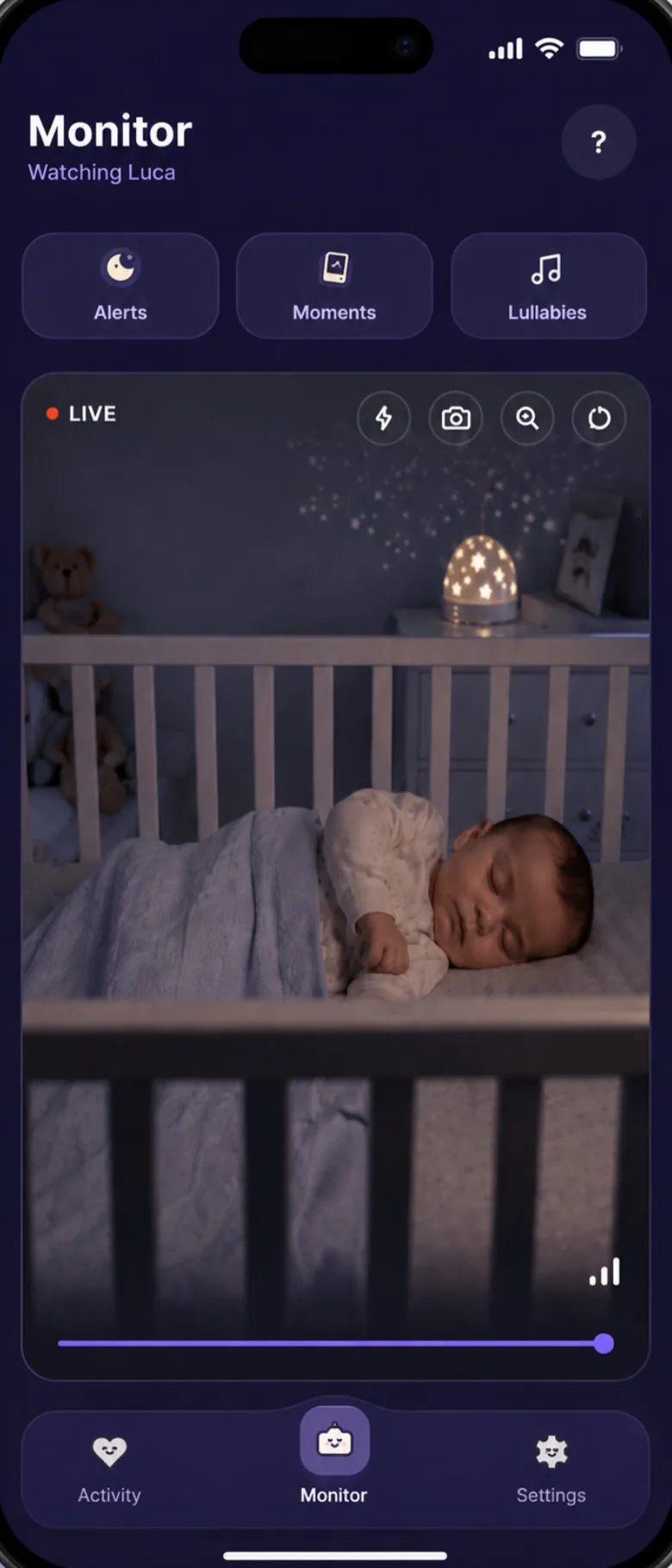
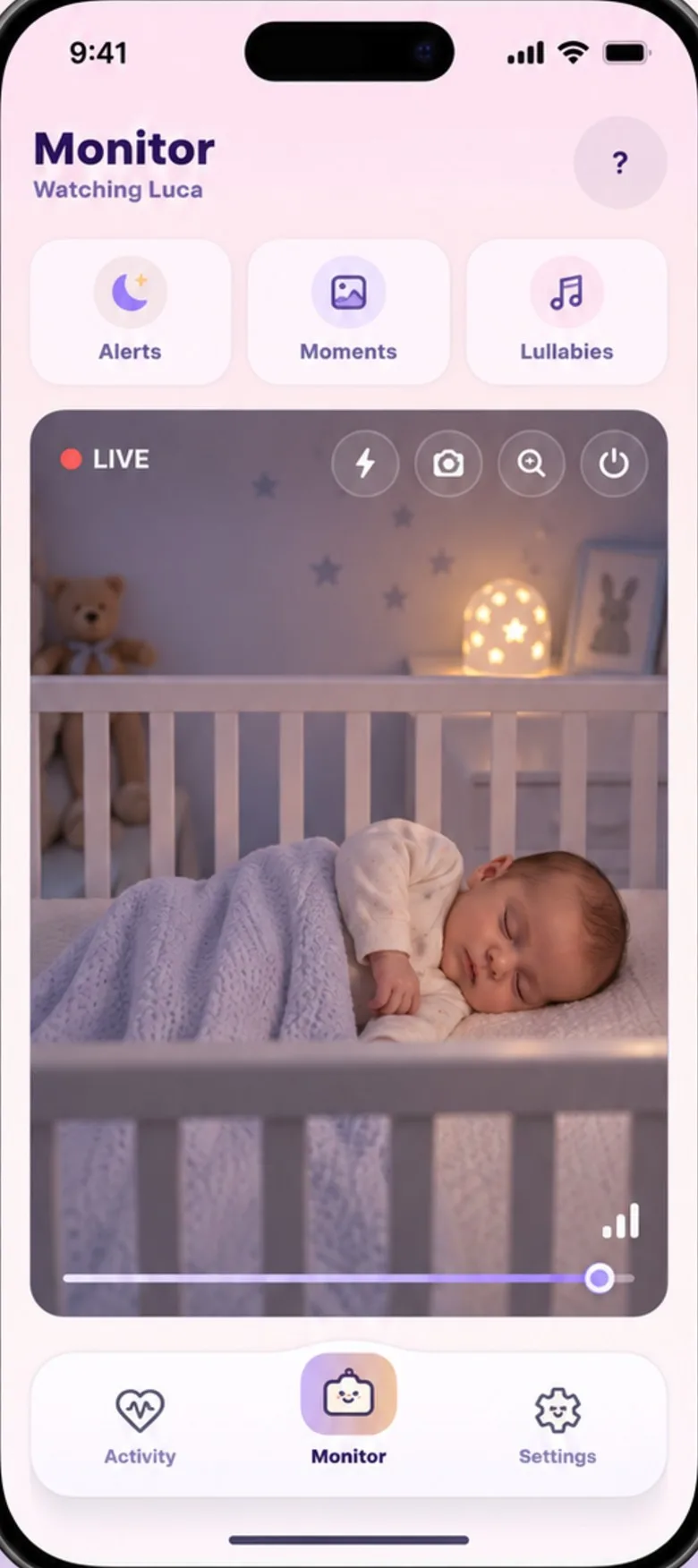
Spit-up at night is one reason parents check often. A monitor lets you hear a cough or a fuss without turning the light on: see sound detection for what the app listens for. It’s a prompt to go and look, not a safety check: if you hear choking or struggling, go to your baby and get urgent help.

Spit-up, quick answers.

How much spit-up is too much?

The sources give no amount. The NHS describes a little milk. The AAP says to call your pediatrician about an increase in how often or how much, or if there’s poor weight gain.

When does baby reflux go away?

The AAP says for most full-term babies it’s gone by 9 to 12 months. The NHS says it usually improves by around 1 year.
Sources

  1. American Academy of Pediatrics, HealthyChildren.org: GER & GERD in Infants
  2. NHS: Reflux in babies

Keep reading.

  1. Should you wake a sleeping newborn to feed?

    When to wake a sleepy newborn for a feed, how often newborns need to eat, gentle ways to wake them, and the signs they are getting enough milk.

    • 23 October 2026
    • 4 min read
  2. The right room temperature for baby sleep.

    What room temperature is best for a sleeping baby, how to check if they are too hot or cold, and what to dress them in, with advice from safe-sleep experts.

    • 23 October 2026
    • 3 min read
  3. When to stop swaddling a baby.

    When to stop swaddling a baby, the rolling signs to watch for, how to swaddle without risking hips or overheating, and how to move to a sleep sack.

    • 23 October 2026
    • 3 min read
  4. When can a baby sleep in their own room?

    When can a baby sleep in their own room? What the AAP and NHS advise about room sharing, how to plan the move, and where a baby monitor can help.

    • 23 October 2026
    • 3 min read
  5. How to take a baby’s temperature.

    How to take a baby’s temperature, which thermometer is most reliable, what counts as a fever at each age, and when to call a doctor right away for help.

    • 23 October 2026
    • 3 min read
  6. Baby monitor apps, side by side.

    Baby’s Day In, Cloud Baby Monitor, Baby Monitor 3G, Annie, Nani and Dormi side by side: phones, prices, alerts, lullabies and logs, from each app’s own pages.

    • 7 October 2026
    • 4 min read
  7. Is a phone safe by the crib?

    Radio waves, heat and cords: what the FDA, WHO, fire services and the CPSC say about keeping a phone by the crib, and how to set one up safely.

    • 7 October 2026
    • 5 min read
  8. Do you need a breathing monitor?

    Sock, under-mattress and camera monitors that track breathing or oxygen: what the AAP, FDA and NIH say, what a study found, and what lowers the risk of SIDS.

    • 7 October 2026
    • 5 min read
  9. Baby monitor app, or a baby monitor?

    Should you use a baby monitor app or buy a baby monitor? What each does well, where each falls short, and how to tell which one suits your home.

    • 5 October 2026
    • 4 min read
  10. Where to put a baby monitor.

    How far a baby monitor should be from the crib, how high to put it and where the cable goes, with the CPSC’s three-foot rule. Phones used as monitors too.

    • 5 October 2026
    • 3 min read
  11. Are baby monitor apps safe?

    Where does the video go? Who can watch? What is kept, and for how long? Seven questions to ask any baby monitor app, and how Baby’s Day In answers them.

    • 5 October 2026
    • 4 min read
  12. A travel baby monitor in your pocket.

    Hotels, holiday rentals, a grandparent’s spare room: how to use two phones as a travel baby monitor, what to pack, and what to check in a room you don’t know.

    • 5 October 2026
    • 3 min read
  13. White noise and lullabies: how loud is too loud?

    What a study of infant sleep machines found, what the American Academy of Pediatrics advises, and how to keep white noise and lullabies gentle on small ears.

    • 5 October 2026
    • 3 min read
  14. The newborn sleep schedule.

    Newborns don’t keep a schedule yet. How much they sleep, how often they wake to feed, when longer nights start, and what helps, from the AAP, NHS and CDC.

    • 5 October 2026
    • 3 min read
  15. How to soothe a crying newborn.

    Why newborns cry, how much is normal, the soothing the AAP and NHS recommend, what colic is, and the signs that mean it’s time to call the doctor.

    • 5 October 2026
    • 5 min read
  16. Baby feeding chart, by age.

    How much formula and how often, from the first days to a year, plus breastfeeding, hunger cues and signs of enough. From the AAP, CDC, NHS and WHO.

    • 5 October 2026
    • 5 min read

Hear the cough. Go and look.

Two phones, no extra hardware. Free while we’re in early access.

Baby's Day In Monitor screen: live video of the nursery, with the baby asleep in the cribBaby's Day In Monitor screen: live video of the nursery, with the baby asleep in the crib