The short answer
For the first weeks there’s no schedule to follow. Newborns sleep about 16 to 17 hours a day, but often only 1 or 2 hours at a time, waking to feed 8 to 12 times in 24 hours. Regular sleep cycles usually arrive at about 4 months, and many families start a bedtime routine at around 3 months. Until then, follow your baby, not the clock.
How much newborns sleep
A lot, in small pieces. The American Academy of Pediatrics (AAP) puts it at about 16 to 17 hours a day, but often only 1 or 2 hours at a time. The NHS says a newborn’s total can be around 18 hours, and the National Sleep Foundation’s range for the first three months is 14 to 17.
The sources differ a little because every baby does. What they agree on is the shape: short sleeps, spread right around the clock, with no real difference between day and night at first.
Want the numbers for your baby’s age? The sleep calculator shows them month by month.
Why they wake so often
Mostly, to eat. A newborn’s stomach is small, so sleep comes in the gaps between feeds. The CDC says a breastfed baby feeds about 8 to 12 times in 24 hours, every 2 to 4 hours at first, and that you may need to wake your baby to feed. The AAP says most newborns eat every 2 to 3 hours, with 8 feeds a day as the usual minimum.
Cincinnati Children’s Hospital advises not letting a newborn sleep longer than five hours at a time in the first five to six weeks. If your baby is so sleepy that feeds are a struggle, tell your midwife, health visitor or paediatrician.
Days and nights, mixed up
Many newborns have their days and nights confused, and there’s no set schedule at first (Cincinnati Children’s). The body clock that tells day from night generally starts to show after about two months.
You can help it along. The NHS suggests:
- By day, open the curtains, play, and don’t worry about everyday noise while they nap.
- At night, keep the lights low, talk little and keep your voice quiet.
The AAP’s version is the same: stay calm and quiet at night.
What a day can look like
Feed, a short time awake, sleep, and round again, day and night. Awake times are short at this age. The sleep calculator shows the range many parents use for a newborn, 45 to 60 minutes, but treat that as a rule of thumb: no medical body sets wake windows.
Your baby will have their own pattern, the NHS says, and it’s unlikely to match other babies you know. Signs of tiredness tell you more than the clock: rubbing eyes, yawning, looking away and fussing.
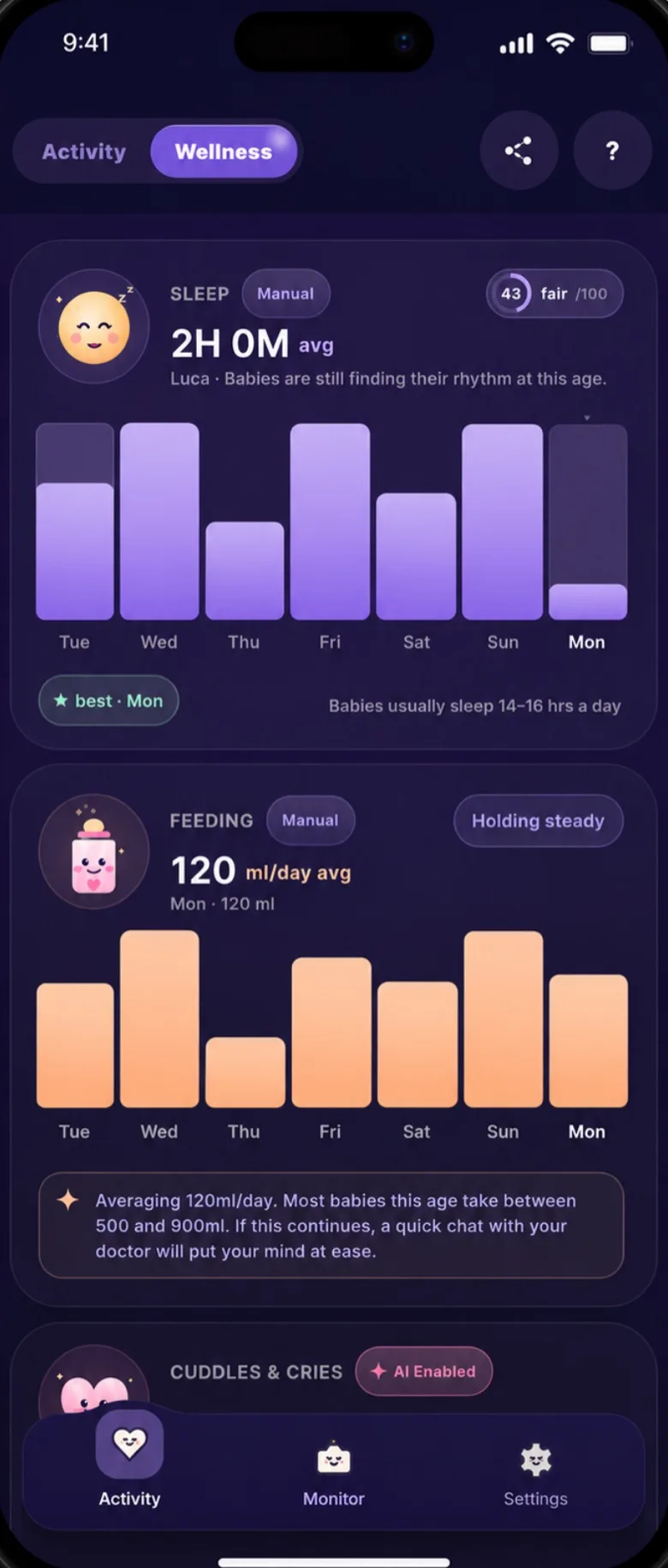
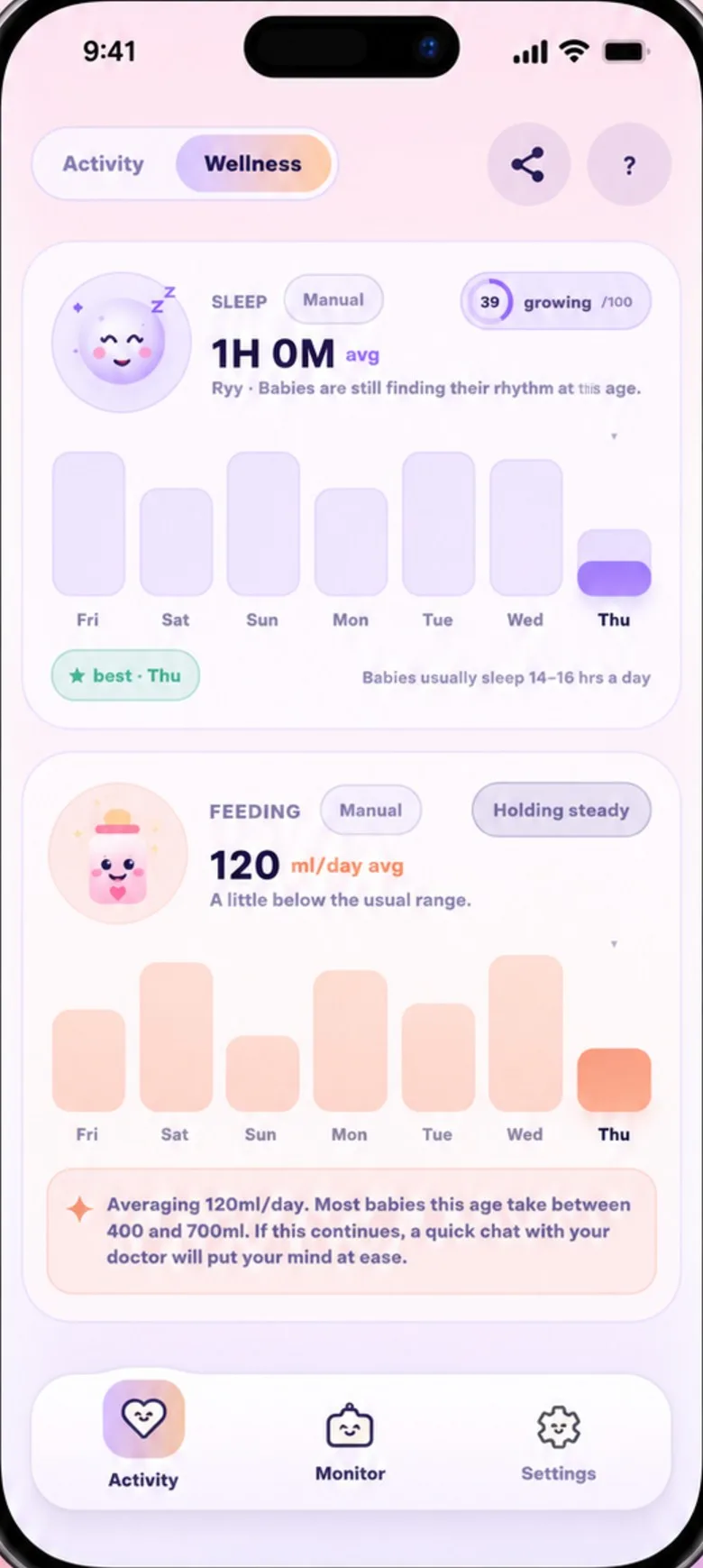
Baby’s Day In logs every nap and feed with one tap and shows the pattern week by week in the Activity tab’s week view, so you can see your baby’s own rhythm take shape.
When a routine starts to make sense
Regular sleep cycles usually arrive at about 4 months (AAP). Many parents feel ready for a bedtime routine at around three months (NHS 111 Wales): the same few steps in the same order, like a bath, a feed and a song.
Longer nights come gradually. Most babies don’t sleep through the night, six to eight hours, until about 3 months or 12 to 13 pounds (Cincinnati Children’s). Between 3 and 6 months some sleep 5 to 8 hours or longer at night, but not all (NHS).
From 4 months, the AAP suggests putting your baby to bed drowsy, rather than waiting until they’re asleep.
Safe sleep, every sleep
Whatever the schedule, the AAP’s safe-sleep basics apply to naps and nights alike:
- On their back, for every sleep.
- On a firm, flat sleep surface.
- In your room, in their own space, for at least the first 6 months.
- Nothing soft in the sleep space: no pillows, loose bedding or soft toys.
When to call the doctor
A newborn who wakes every few hours, eats well, seems content and is alert for part of the day is fine sleeping the rest of the time, the AAP says. Call your paediatrician if your baby is rarely alert, doesn’t wake up for feeds, or seems too tired or uninterested to eat.
Get urgent help, the NHS says, if a baby is difficult to wake or can’t be woken, or isn’t feeding.
Newborn sleep, quick answers.
How long should a newborn nap at a time?
Often just 1 or 2 hours, the AAP says, around the clock. Naps and nights don’t look very different yet. Longer stretches come gradually, usually from about 3 months.
Is it okay for a newborn to sleep all day?
Sleeping most of the day is normal, as long as your baby wakes every few hours, eats well, seems content and is alert for part of the day (AAP). If they’re rarely alert, don’t wake for feeds or seem too tired to eat, call your paediatrician.
When should you start a sleep routine with a newborn?
Many parents start a simple bedtime routine at around three months (NHS 111 Wales). Before that, follow your baby’s cues: keep days bright and nights calm and quiet.
Should I wake my newborn to feed?
Sometimes. The CDC says newborns need to eat every 2 to 4 hours at first and that you may need to wake your baby to feed, and Cincinnati Children’s advises no more than five hours at a time in the first five to six weeks. Your midwife, health visitor or paediatrician can tell you what’s right for your baby.
Sources
- American Academy of Pediatrics, HealthyChildren.org: Getting Your Baby to Sleep
- American Academy of Pediatrics, HealthyChildren.org: How Often and How Much Should Your Baby Eat?
- American Academy of Pediatrics, HealthyChildren.org: How to Keep Your Sleeping Baby Safe: AAP Policy Explained
- American Academy of Pediatrics, HealthyChildren.org: Common Conditions in Newborns
- NHS: Helping your baby to sleep
- NHS: When to get urgent medical help for babies and children under 5
- NHS 111 Wales: Newborn essentials, sleep
- CDC: How Much and How Often to Breastfeed
- Cincinnati Children’s Hospital: Sleep Patterns in Newborns
- Children’s Hospital of Philadelphia: Newborn Sleep Patterns
- Rivkees SA. Developing circadian rhythmicity in infants. Pediatrics 2003;112(2):373–381
- Hirshkowitz M et al. National Sleep Foundation’s sleep time duration recommendations. Sleep Health 2015;1(1):40–43