When to stop swaddling a baby.

Swaddling can calm a newborn, but it has an end date. The AAP’s signs for stopping, how to swaddle safely until then, and what to try next.

  • By the Baby’s Day In team
  • Published
  • 3 min read

Stop swaddling as soon as your baby shows any sign of trying to roll over, says the AAP. That can be as early as 2 months, but every baby is different. Until then, use a thin blanket, keep the wrap loose at the hips and legs, always lay your baby on their back, and watch for overheating.

The signs it’s time to stop

The AAP’s rule is simple: stop swaddling the moment your baby shows any sign of trying to roll. It says rolling attempts can start as early as 2 months.

Don’t wait for a full roll: any attempt, such as pushing onto a side, is reason enough to stop.

How to swaddle safely until then

  • Thin blanket only. The AAP says to avoid heavy or thick ones.
  • Loose at the hips. The AAP warns that swaddling too tightly can lead to hip problems, so the legs need room to bend and move.
  • Room to breathe. Leave space for two or three fingers between the chest and the wrap.
  • On the back. Every sleep, in a clear cot with a firm, flat mattress.

See how to soothe a crying newborn for other calming ideas.

Watch for overheating

The AAP says swaddling can raise the chance of overheating. Signs include sweating, damp hair, flushed cheeks, heat rash and fast breathing. If you see them, unwrap your baby and cool the room. More on temperature in baby room temperature for sleep.

What to do after swaddling

Some babies handle the change easily; others protest for a few nights. Some ideas, from general practice rather than a single source:

  • Try one arm out for a few nights, then both.
  • Move to a wearable blanket or sleep sack, which keeps the baby warm without anything loose in the cot.
  • Keep the rest of the bedtime routine the same.

Expect some wakeful nights. If sleep stays hard for weeks, talk to your doctor or health visitor.

Swaddle or sleep sack?

The US Safe to Sleep campaign says to dress a baby in a wearable blanket or an extra layer of clothing to keep them warm without adding items to the sleep area. A sleep sack is the same idea once the arms are free: warmth that can’t come loose or cover the face. The Lullaby Trust says to choose a lightweight, well-fitting sleep bag. A bag that’s too big can slide up, so check the neck and armholes fit.

Common swaddling mistakes

  • Wrapped too tight at the legs. The AAP links this to hip problems.
  • A thick blanket. The AAP advises a thin one.
  • Carrying on after a roll attempt. The AAP says to stop at the first sign.
  • A warm room plus a swaddle. Check the chest, and see the room temperature guide.
  • Loose ends. A blanket that comes undone can end up near your baby’s face. Re-wrap or switch to a sleep sack.

A check before each sleep

  1. Baby is on their back, in a clear cot.
  2. The wrap is snug on the chest but your fingers fit in (two or three).
  3. Legs and hips can bend and move.
  4. No signs of sweating or flushed cheeks.

Why the rolling rule matters

Once a baby can roll, a swaddle that holds the arms in can leave them on their front without a way to push up. That’s the reasoning behind the AAP’s rule, and it’s why “wait and see” isn’t advised. A baby who has only managed a half-roll today may do the full one tomorrow, so stop at the first attempt, even if the night sleeps have only just got easier. If your baby settles worse without the wrap, try the steps above rather than going back.

A monitor during the change

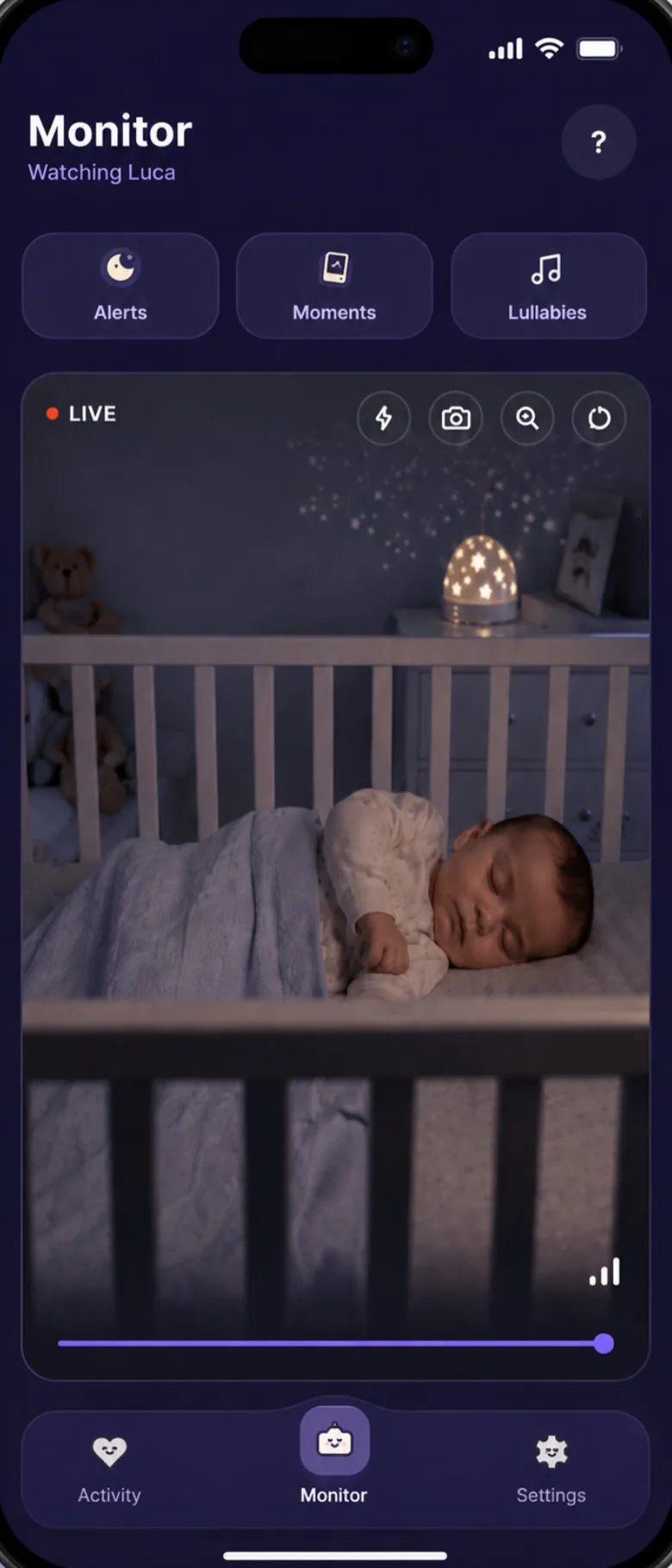
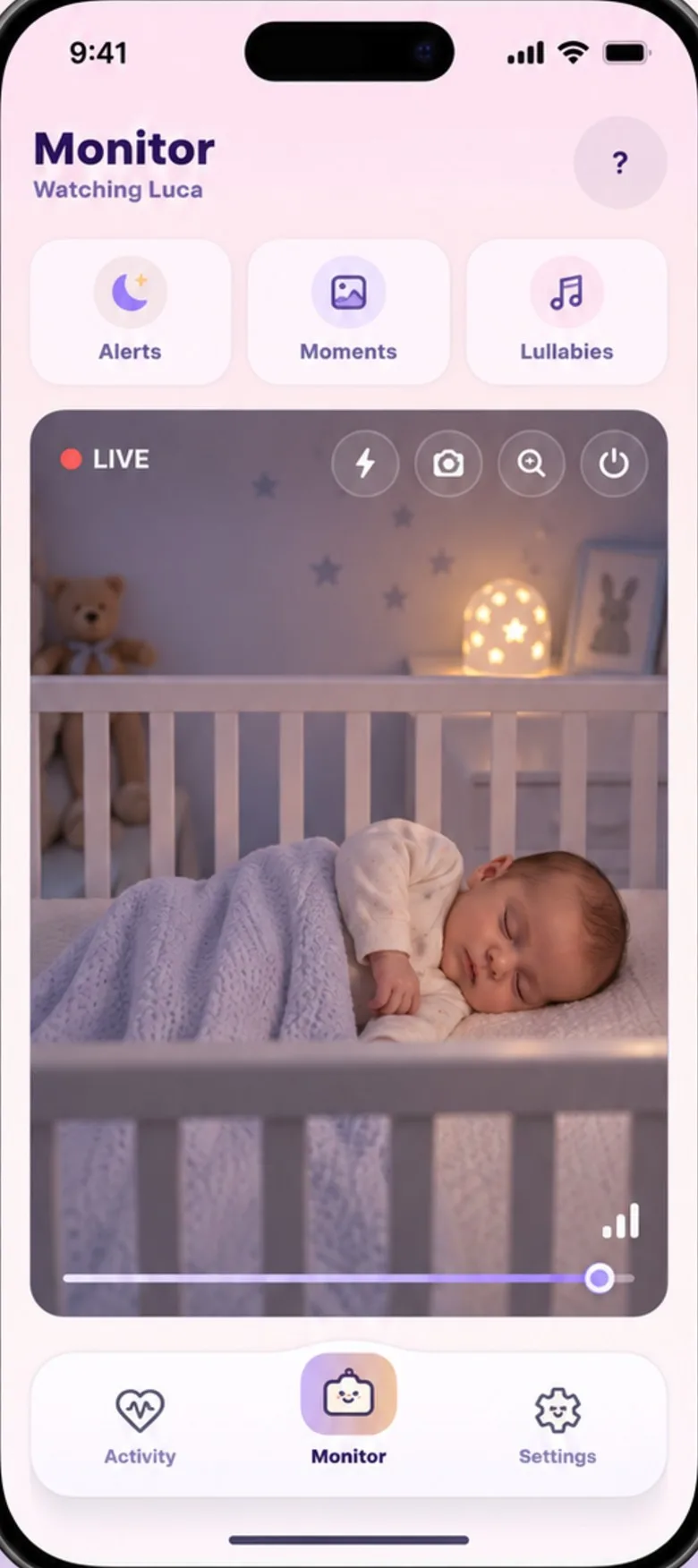
A few unsettled nights are normal while your baby adjusts, and being able to hear them without walking in each time keeps them (and you) from waking fully. With the nursery phone by the cot, you can hear whether a fuss is settling. It doesn’t tell you whether your baby is safe, so keep the room set up for safe sleep and share your room: the NHS says for the first six months your baby should sleep in the same room as you.

Swaddling, quick answers.

Can a baby sleep swaddled for the whole first year?

No. The AAP says to stop as soon as your baby shows any sign of trying to roll over, which can be as early as 2 months.

Is swaddling safe for hips?

Only if it is loose around the legs. The AAP says swaddling too tightly may lead to hip problems, so let the hips move freely.
Sources

  1. American Academy of Pediatrics, HealthyChildren.org: Swaddling: Is it Safe?
  2. NHS: Helping your baby to sleep

Keep reading.

  1. Should you wake a sleeping newborn to feed?

    When to wake a sleepy newborn for a feed, how often newborns need to eat, gentle ways to wake them, and the signs they are getting enough milk.

    • 23 October 2026
    • 4 min read
  2. The right room temperature for baby sleep.

    What room temperature is best for a sleeping baby, how to check if they are too hot or cold, and what to dress them in, with advice from safe-sleep experts.

    • 23 October 2026
    • 3 min read
  3. When can a baby sleep in their own room?

    When can a baby sleep in their own room? What the AAP and NHS advise about room sharing, how to plan the move, and where a baby monitor can help.

    • 23 October 2026
    • 3 min read
  4. Baby spitting up: normal, or not?

    Most babies spit up. What is normal, when it usually stops, tips to reduce it, and the signs, such as green vomit or poor weight gain, that need a doctor.

    • 23 October 2026
    • 3 min read
  5. How to take a baby’s temperature.

    How to take a baby’s temperature, which thermometer is most reliable, what counts as a fever at each age, and when to call a doctor right away for help.

    • 23 October 2026
    • 3 min read
  6. Baby monitor apps, side by side.

    Baby’s Day In, Cloud Baby Monitor, Baby Monitor 3G, Annie, Nani and Dormi side by side: phones, prices, alerts, lullabies and logs, from each app’s own pages.

    • 7 October 2026
    • 4 min read
  7. Is a phone safe by the crib?

    Radio waves, heat and cords: what the FDA, WHO, fire services and the CPSC say about keeping a phone by the crib, and how to set one up safely.

    • 7 October 2026
    • 5 min read
  8. Do you need a breathing monitor?

    Sock, under-mattress and camera monitors that track breathing or oxygen: what the AAP, FDA and NIH say, what a study found, and what lowers the risk of SIDS.

    • 7 October 2026
    • 5 min read
  9. Baby monitor app, or a baby monitor?

    Should you use a baby monitor app or buy a baby monitor? What each does well, where each falls short, and how to tell which one suits your home.

    • 5 October 2026
    • 4 min read
  10. Where to put a baby monitor.

    How far a baby monitor should be from the crib, how high to put it and where the cable goes, with the CPSC’s three-foot rule. Phones used as monitors too.

    • 5 October 2026
    • 3 min read
  11. Are baby monitor apps safe?

    Where does the video go? Who can watch? What is kept, and for how long? Seven questions to ask any baby monitor app, and how Baby’s Day In answers them.

    • 5 October 2026
    • 4 min read
  12. A travel baby monitor in your pocket.

    Hotels, holiday rentals, a grandparent’s spare room: how to use two phones as a travel baby monitor, what to pack, and what to check in a room you don’t know.

    • 5 October 2026
    • 3 min read
  13. White noise and lullabies: how loud is too loud?

    What a study of infant sleep machines found, what the American Academy of Pediatrics advises, and how to keep white noise and lullabies gentle on small ears.

    • 5 October 2026
    • 3 min read
  14. The newborn sleep schedule.

    Newborns don’t keep a schedule yet. How much they sleep, how often they wake to feed, when longer nights start, and what helps, from the AAP, NHS and CDC.

    • 5 October 2026
    • 3 min read
  15. How to soothe a crying newborn.

    Why newborns cry, how much is normal, the soothing the AAP and NHS recommend, what colic is, and the signs that mean it’s time to call the doctor.

    • 5 October 2026
    • 5 min read
  16. Baby feeding chart, by age.

    How much formula and how often, from the first days to a year, plus breastfeeding, hunger cues and signs of enough. From the AAP, CDC, NHS and WHO.

    • 5 October 2026
    • 5 min read

Hear the fuss. Skip the peek.

Two phones, no extra hardware. Free while we’re in early access.

Baby's Day In Monitor screen: live video of the nursery, with the baby asleep in the cribBaby's Day In Monitor screen: live video of the nursery, with the baby asleep in the crib