The short answer
Quieter than you’d think, further away than you’d guess, and not all night. A 2014 study found that infant sleep machines at full volume, close to the crib, were louder than the noise limit recommended for hospital nurseries. The American Academy of Pediatrics advises putting any sleep machine as far from your baby’s head as you can, and using it for a short time only.
What the study found
Researchers in Toronto tested 14 infant sleep machines: the kind sold to play white noise and other sounds to help babies sleep. They played each one at full volume and measured it 30 cm away, about where a machine sits on the crib rail, then at 100 cm and 200 cm, correcting for the ear canal of a six-month-old.
- At 30 cm, every machine was louder than 50 dBA, the noise limit recommended for babies in hospital nurseries.
- Three machines went above 85 dBA. Played that loud for more than eight hours, that would exceed the workplace noise limits set to protect adults’ hearing.
The study was published in Pediatrics, the American Academy of Pediatrics’ journal. Its authors concluded that these machines can produce sound levels that may damage a baby’s hearing and auditory development.
What paediatricians advise
The American Academy of Pediatrics keeps its advice for parents short: if you use a sleep machine, place it as far away from your baby’s head as possible, and use it for a short time only.
That gives you three things to work with: distance, volume and time.
Keeping it gentle at home
- Distance first. Sound fades fast as it travels, so the easiest win is moving the speaker away from the crib: across the room, not on the rail.
- Then volume. Start at the lowest setting that still covers the noise you’re trying to mask, and leave it there.
- Then time. Use a timer, or a sound that stops on its own, rather than running it all night.
- Check it where your baby lies. A sound meter app on your phone gives a rough reading: hold the phone about where your baby’s head would be, not next to the speaker. If you want a number to aim under, the study’s yardstick was the 50 dBA hospital-nursery limit.
Do lullabies count?
Any sound played near a sleeping baby follows the same three rules. A lullaby that plays for a minute or two, quietly, from across the room, is a long way from a machine running beside the crib all night.
Some babies settle to music, some to a familiar voice, and some to neither. Watch what works for yours.
How Auto-Soothe handles it
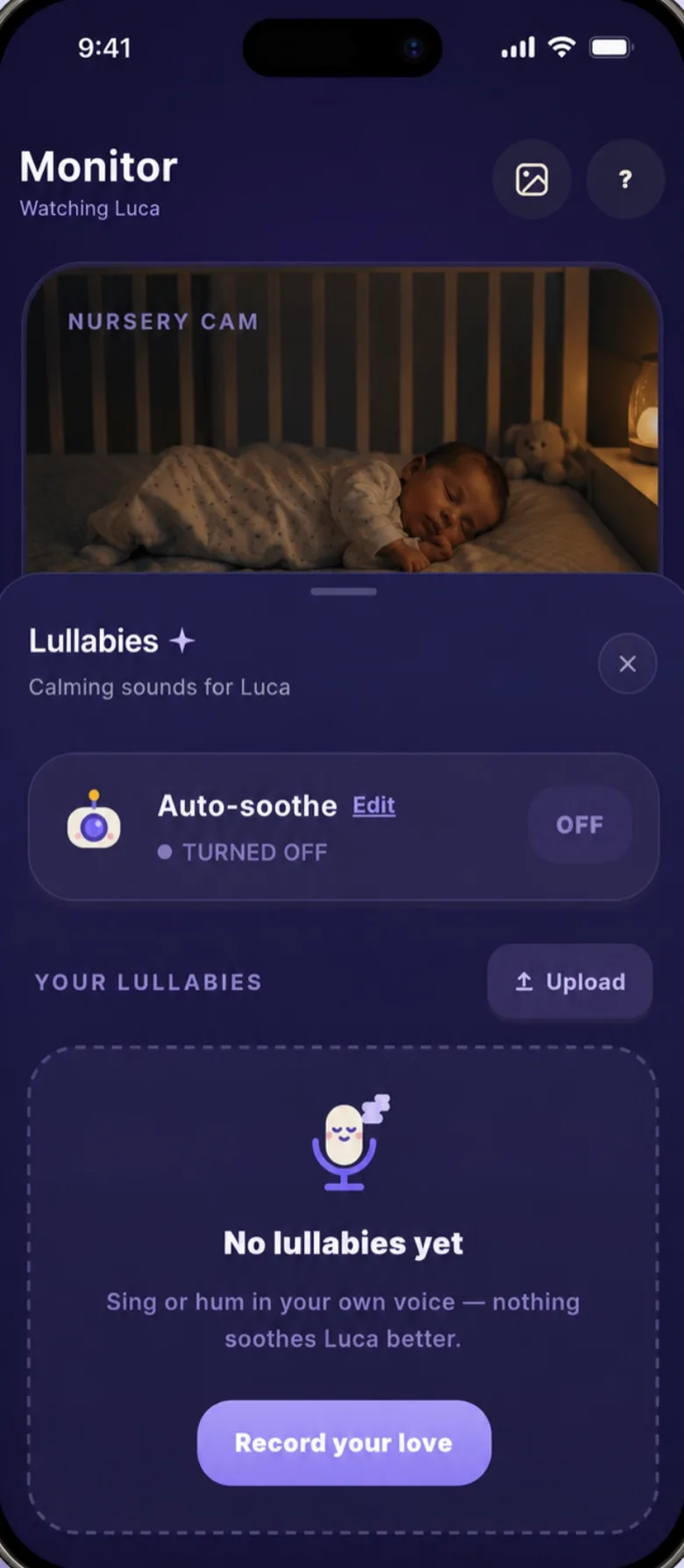
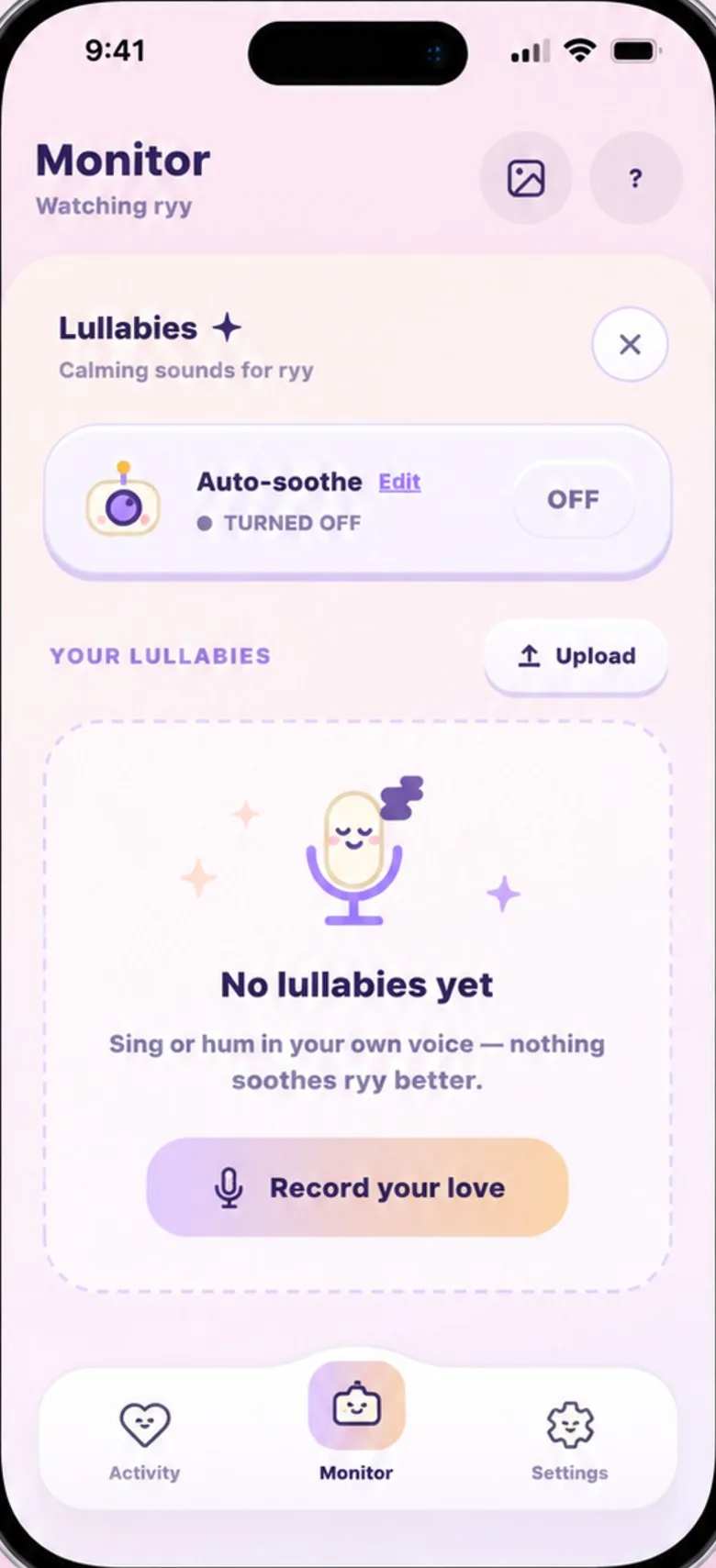
Baby’s Day In’s Auto-Soothe plays a lullaby, or your own recorded voice, when it hears your baby cry. It follows the same three rules:
- Distance: it plays from the nursery phone, which should sit at least a metre, about three feet, from the crib.
- Volume: it plays at the nursery phone’s media volume, which you set. Start low.
- Time: it makes one attempt per crying spell: the mix you set, one or two sounds of up to three minutes each. If your baby is still crying, it rings your phone instead of playing on: a baby a lullaby can’t settle needs a person.
It doesn’t play white noise, and it isn’t built to play all night.
If you’re worried about hearing
If you ever have concerns about your baby’s hearing, talk to your health visitor, paediatrician or doctor.
White noise, quick answers.
Can I leave white noise on all night for my baby?
The American Academy of Pediatrics advises the opposite: if you use a sleep machine, use it for a short time only, as far from your baby’s head as you can. A timer, or a sound that stops on its own, does the job without running all night.
Is 70 dB too loud for a baby?
It’s well above 50 dBA, the noise limit recommended for babies in hospital nurseries and the yardstick the 2014 study used. Move the machine further away and turn it down, then check with a sound meter app held where your baby’s head would be. Phone meters are rough, so treat the number as a guide.
How close should white noise be to a baby?
As far from your baby’s head as you can manage: across the room, not on the crib rail. In the 2014 study, machines measured 30 cm away were the loudest, and distance is the easiest way to bring the level down.